WHAT JONAH TEACHES US ABOUT FAILURE AND GRACE

You replay it in your head at 2:17 a.m.
The moment you ran when God said go. The opportunity you squandered. The compromise you made. The person you let down. Your stomach tightens just thinking about it.
And the question won’t let you sleep: Is it too late? Have I disqualified myself? Does God still want to use me, or has He moved on to someone who won’t disappoint?
It might be one big moral failure you can’t undo. Or a pattern of small compromises that accumulated until you barely recognize yourself anymore. Either way, you’re stuck believing your past has disqualified you from your future.
But what if that’s not true?
What if the very thing you think disqualifies you is exactly where God’s mercy wants to meet you?
A Prophet and a City in Need of Mercy
There’s a story in Scripture about a prophet who deserved replacement and a city that deserved destruction. Both got second chances.
God called Jonah to go to Nineveh to share His message of second chances. Jonah ran. God sent a storm, then a fish. Jonah hit rock bottom and finally surrendered.
Then this happens: “The Lord commanded the fish, and it vomited Jonah onto dry land. Then the word of the Lord came to Jonah a second time: ‘Go to the great city of Nineveh and proclaim to it the message I give you.’ Jonah obeyed the word of the Lord and went to Nineveh” (Jonah 2:10-3:3).
Nineveh was massive—120,000 people —so large that it took three days to walk through. And it was known for extreme violence: impaling captives, skinning prisoners, beheading enemies as terror tactics.
This was the first place Jonah wanted to see overthrown, and the last place he wanted to see forgiven.
Here’s what’s shocking: The pagan king of Nineveh repented faster than God’s own prophet did.
Both the city and the prophet were failures.
Both deserved to be done.
But God gave them second chances instead.
When God Calls a Second Time
“The word of the Lord came to Jonah a second time.”
God doesn’t shame him. Doesn’t replace him with someone more obedient. Doesn’t lecture him about disappointment.
He just speaks again. And it’s almost identical to chapter 1. Same call. Same city. Same mission.
God is consistent. He hasn’t changed His mind about what He wants Jonah to do.
But this time, Jonah goes.
The lesson is simple: failure is not final. Obedience can begin again.
And that is of great encouragement to any of us who have strayed from our calling!
Five Words That Changed Everything
Jonah walks into this massive, violent city and preaches the shortest sermon in history:
“Forty more days and Nineveh will be overthrown.”
Only five words in Hebrew.
No altar call. No explanation of mercy. No invitation to repent. Just a stark warning. And, I’m guessing, the words may have been half-hearted. There’s certainly no mention of forgiveness in Jonah’s message.
But here’s what happens: “The Ninevites believed God. A fast was proclaimed, and all of them, from the greatest to the least, put on sackcloth. When Jonah’s warning reached the king of Nineveh, he rose from his throne, took off his royal robes, covered himself with sackcloth and sat down in the dust” (Jonah 3:5-6).
The entire city—from the king to the common people—believed God and repented.
The response was extraordinary. This is one of the greatest moments of repentance in all of scripture!
The king decreed: “Let everyone call urgently on God. Let them give up their evil ways and their violence. Who knows? God may yet relent and with compassion turn from his fierce anger so that we will not perish” (Jonah 3:8-9).
And the result? “When God saw what they did and how they turned from their evil ways, he relented and did not bring on them the destruction he had threatened” (Jonah 3:10).
God used five words from a half-hearted prophet to change an entire city.
The Theology of “Who Knows?”
I love what the king says: “Who knows? God may yet relent.” That’s theological gold.
The king isn’t presuming on God’s mercy. He’s not demanding forgiveness. He’s not claiming they deserve another chance. He’s just throwing himself and his entire city into the hands of God. Appealing to a mercy they don’t deserve. Hoping for a grace they can’t earn.
“Who knows?”
Maybe. Possibly. Perhaps.
You may be afraid to pray because you’re not sure God will answer. You think you need certainty before you return. But Nineveh returned to God with uncertainty.
They had no guarantees. They only had “who knows?” That was enough. They repented anyway. And God met them with mercy.
What Repentance Actually Looks Like
Repentance is a Spirit-produced change of heart that results in a visible change of direction.
It’s not just feeling bad. It’s not just saying sorry. It’s a complete turning around—from sin toward God, from rebellion toward obedience, from death toward life.
Look at Nineveh’s example. They believed God. They humbled themselves—the king took off his royal robes and sat in dust. They confessed their evil without excuses. They appealed to a mercy they had no claim on.
And their repentance moved the heart of God. That’s always true.
Repentance opens the door to mercy.
The prophet Joel writes: “Return to the Lord your God, for he is gracious and compassionate, slow to anger and abounding in love, and he relents from sending calamity” (Joel 2:13).
The apostle John writes: “If we confess our sins, he is faithful and just and will forgive us our sins and purify us from all unrighteousness” (1 John 1:9).
God is not reluctant to forgive. He is ready.
The God of the Second Chance
Here’s what this means for you: God gives second chances to reluctant prophets and rebellious cities. No one is beyond His grace.
If God gave Jonah another chance after he ran from God, caused a storm, and got swallowed by a fish—He can give you another chance.
If God gave Nineveh another chance after generations of extreme violence—He can give your city another chance.
If God can turn 120,000 hearts through five half-hearted words from a reluctant prophet—He can use you too, with all your failures.
Jonah obeyed. Nineveh repented. God relented.
That’s the power of mercy in three sentences. And it is available to you as well.
Take Action
Is there anything stopping you from accepting God’s grace? Maybe it is shame. Maybe it is pride. Maybe it is doubt—the fear that God will not really extend mercy this time.
Whatever it is, it’s not bigger than God’s grace.
You do not need guarantees before you return to Him. You just need to come back.
Stop letting yesterday’s failure define today. If God is calling you to something you once ran from, obey Him now. If you need to repent, do what Nineveh did: believe God, humble yourself, confess your sin, and appeal to His mercy.
Then tell one trusted person, “I’m turning back to God. Pray for me.”
Failure is not final. God still gives second chances.
All for Jesus,
Brad D. Jenkins
P.S. — If this has been helpful, please send me a message at brad@bradjenkins.me and let me know. My writing aims to help people enjoy a vibrant relationship with Jesus, and it is an honor to be on this journey with you. To read previous newsletters or to sign up so that you don’t miss future posts, visit www.bradjenkins.me/blog.
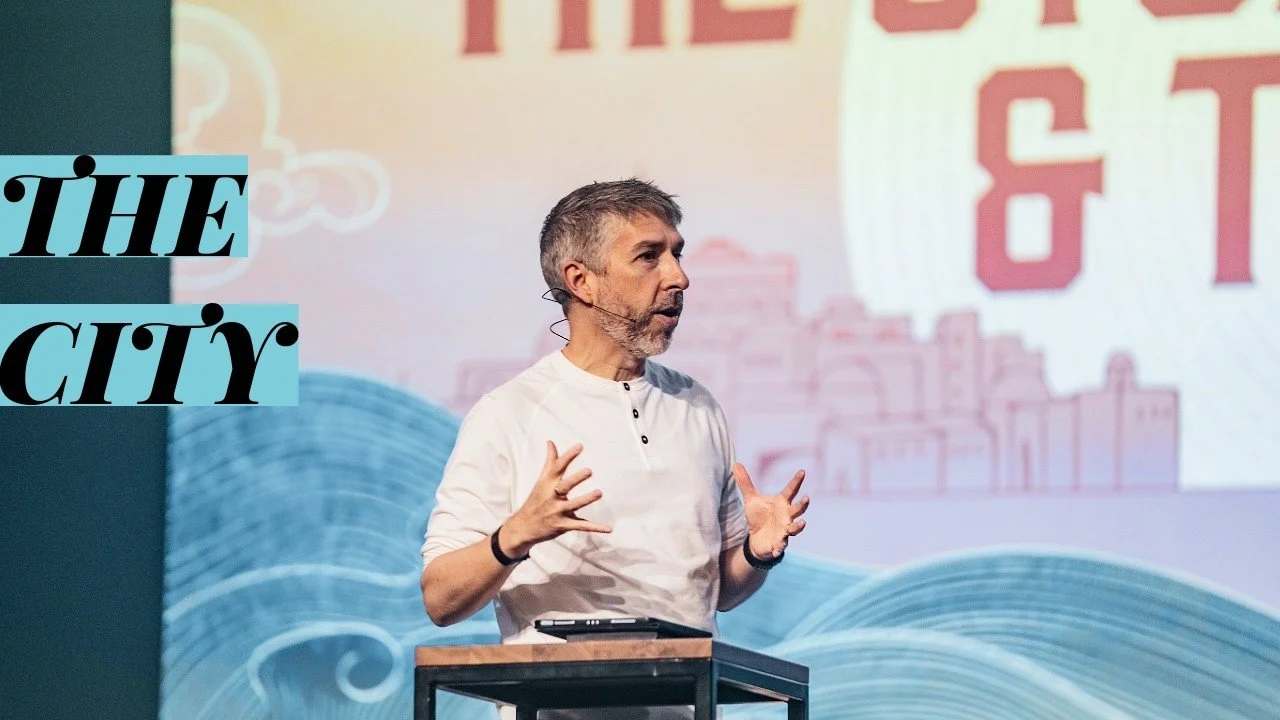
Watch the message “The City” by Brad D. Jenkins at Anthem Church. YouTube